go meet
People
Let’s meet the discoverers whose groundbreaking ideas and discoveries changed the way we understand our world and the Universe! Very wow
★★★★ 4.0/5
OMG! Really strange people!
— About us
/01
From groundbreaking discoveries and bold theories, we present the people who changed the world and science
Throughout history, scientists and explorers have observed, questioned, and challenged the world around them. Their ideas helped us understand everything from the smallest particles to the largest structures in the Universe. Some transformed our knowledge through observation and experimentation, while others developed theories that changed the way we see space, matter, time, and life. Together, their work created a continuous chain of discoveries, with each generation building upon the questions and knowledge left by those before them. Today, their stories continue to shape science, inspire new research, and help us understand the Universe we are part of.
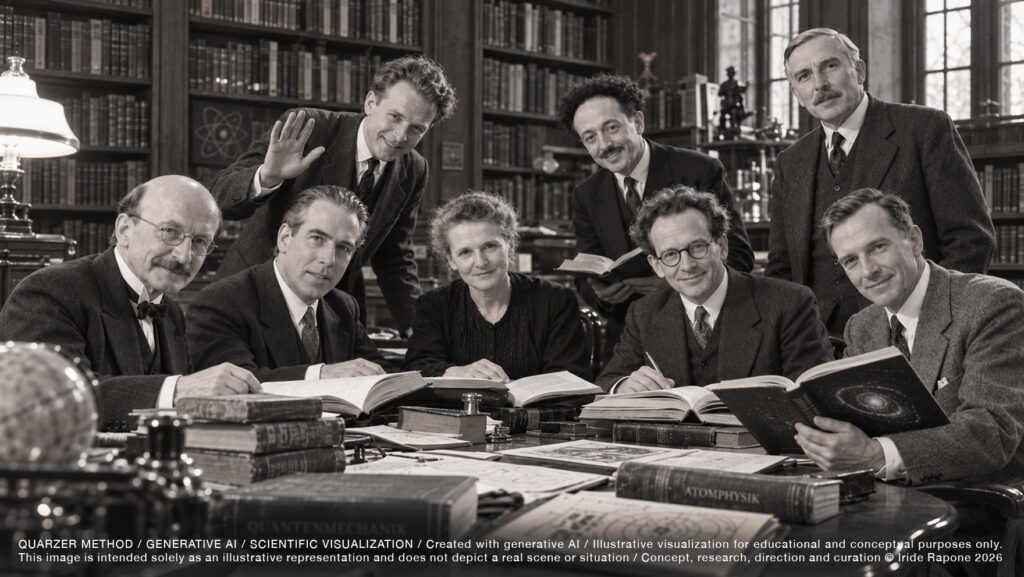
THE MINDS THAT CHANGED SCIENCE
Scientists come from many different fields: some are astronomers, others physicists or chemists, while many have worked across all three disciplines. As education became more accessible and women gained greater opportunities to study and pursue scientific careers, new paths of discovery opened to generations of brilliant minds; Marie Curie’s pioneering work on radioactivity helped make medical X-ray imaging possible, while Henrietta Swan Leavitt discovered the relationship between the brightness and pulsation of Cepheid stars, giving astronomers a way to measure their distance from Earth.
This page is dedicated to the great minds whose genius, curiosity, and discoveries have contributed to the evolution of human knowledge and our understanding of the Universe.
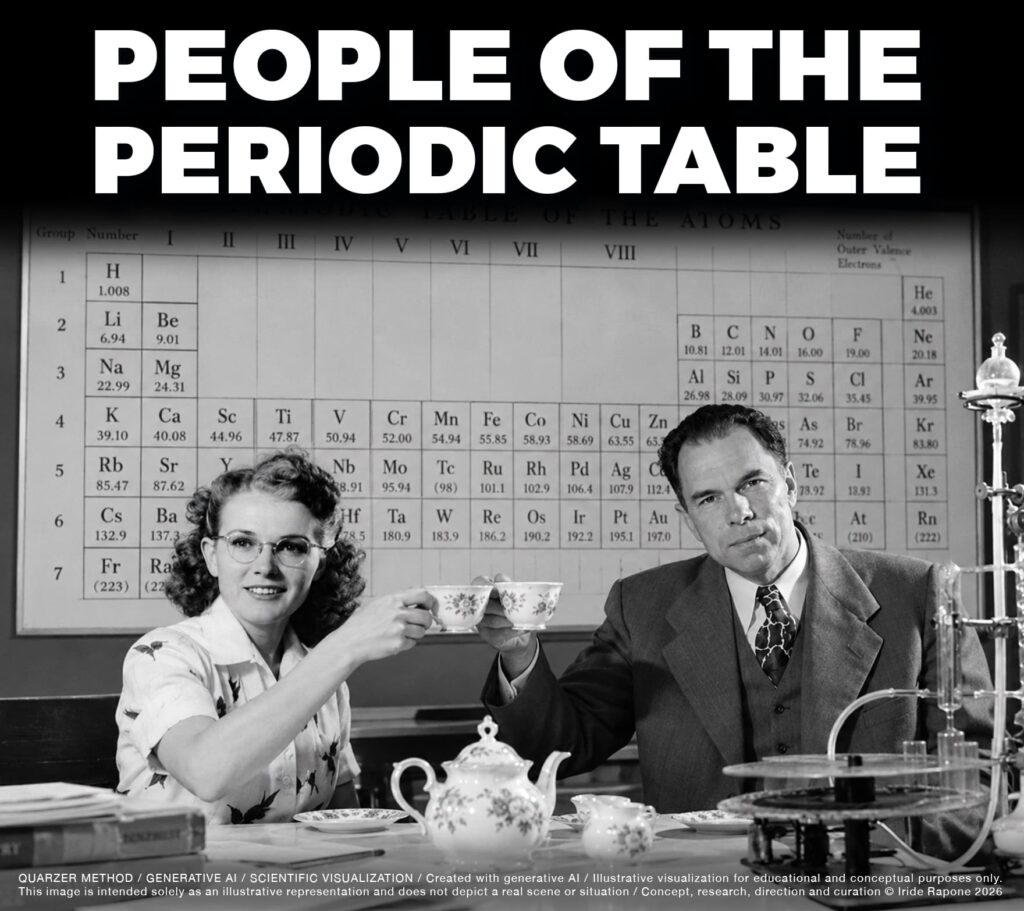
WELCOME TO THE WORLD OF SCIENTIFIC DISCOVERY

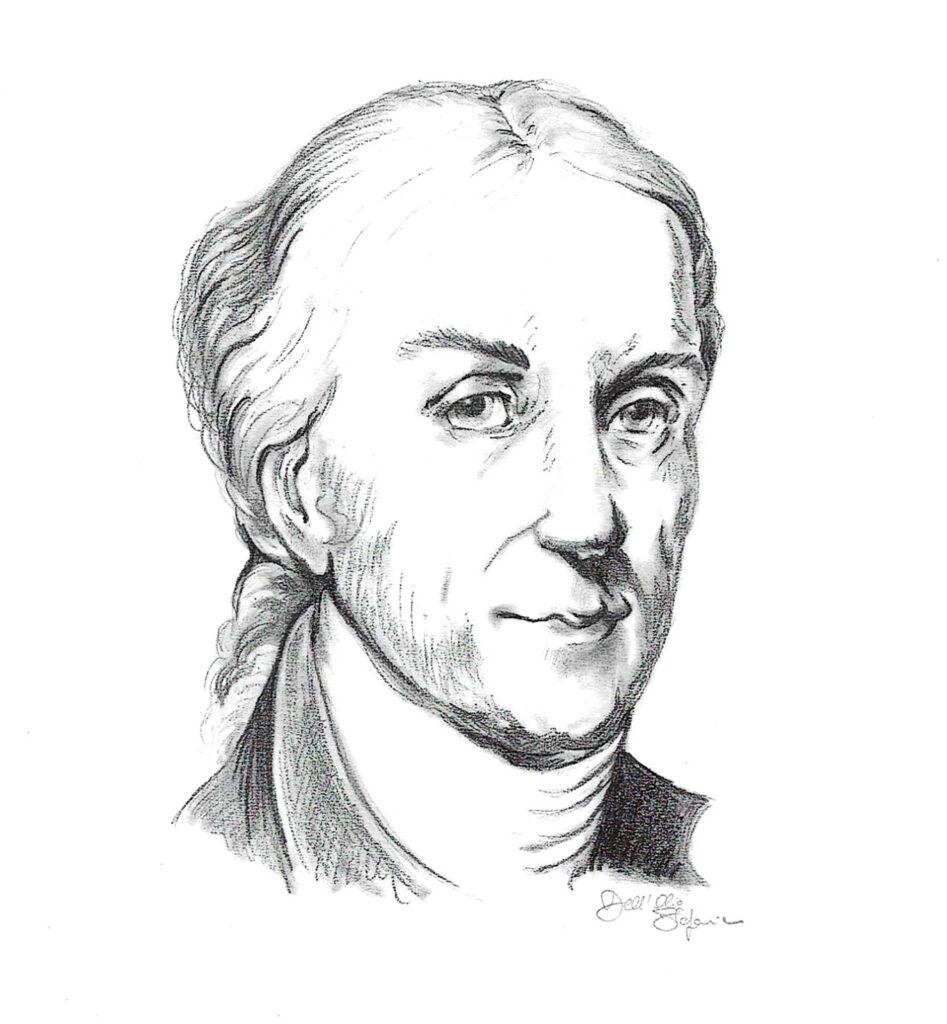
Artwork by Stefania Dell’Olio
© Stefania Dell’Olio
Henry Cevendish
Personal details: Born on 10 October 1731 in Nice, France – Died on 24 February 1810 in London, United Kingdom.
Education and Specialisation: Educated at Newcome’s School in Hackney and studied at Peterhouse, University of Cambridge. Qualification: Natural Philosopher, Chemist, and Physicist.
Major Discovery: Discovery and isolation of hydrogen gas (which he called “inflammable air”) as a distinct element in 1766, and the accurate measurement of the density and mass of the Earth through the famous Cavendish Experiment (1797–1798).
Other Less Well-Known Discoveries
1766: Systematic measurement of the specific gravity and density of different gases, proving that “inflammable air” (hydrogen) was distinctly lighter than atmospheric air and “fixed air” (carbon dioxide).
1771: Formulation of an early mathematical theory of electrostatics, introducing the concept of electric potential (which he termed “degree of electrification”) and predicting the inverse-square law of electrostatic force before Charles-Augustin de Coulomb.
1781: Experimental anticipation of Ohm’s Law; lacking modern measuring instruments, Cavendish estimated electrical current and conductivity by passing currents through his own body and gauging the severity of the shock.
1784: Discovery of the compound nature of water, demonstrating through spark-chamber combustion that water is produced by combining hydrogen (“inflammable air”) and oxygen (“dephlogisticated air”) in a 2:1 volume ratio.
1785: Discovery of an unreactive residue (~1/120th part) while burning atmospheric nitrogen with oxygen, an observation that anticipated the discovery of noble gases (specifically argon) by over a century.
1798: Measurement of the gravitational attraction between lead spheres in the laboratory, allowing the first precise determination of the Universal Gravitational Constant ($G$) and Earth’s mass.
Ventures and Recognitions
1760: Elected as a Fellow of the Royal Society (FRS) of London, actively serving on its Council and key scientific committees for over four decades.
1766: Awarded the Royal Society’s prestigious Copley Medal for his groundbreaking paper On Factitious Airs, which established hydrogen as a distinct chemical entity.
1773: Elected as a Trustee of the British Museum, playing a key administrative and advisory role in expanding and organizing its scientific collections.
1800: Helped establish the Royal Institution of Great Britain as one of its founding managers and major financial patrons, closely supporting the experimental work of scientists like Humphry Davy.
1803: Elected as one of the eight Foreign Associates of the French Academy of Sciences (Institut de France), one of the highest international honors attainable by a scientist at the time.
Henry Cavendish, born in Nice to a high-ranking British aristocratic family in 1731, was a man of extreme wealth, immense intellect, and extraordinary eccentricities. Inheriting a vast fortune that led French physicist Jean-Baptiste Biot to call him “the richest of all the wise, and the wisest of all the rich,” Cavendish lived an almost monastic life entirely dedicated to scientific precision. Suffering from social anxiety bordering on severe pathological shyness—leading modern biographers to suggest he may have been on the autism spectrum—he shunned nearly all human contact. He avoided public life, communicated with his household female servants solely through written notes, and frequented only the meetings of the Royal Society, where he would quietly slip into rooms and engage in conversation only if addressed strictly on scientific matters.
Despite his profound reclusiveness, Cavendish achieved groundbreaking scientific milestones. In 1766, he isolated hydrogen gas (which he called “inflammable air”) and demonstrated it was a distinct element far lighter than atmospheric air. Decades later, in 1797–1798, using a delicate torsion balance apparatus originally designed by John Michell, he carried out the famous “Cavendish Experiment”. By measuring the minuscule gravitational attraction between small lead spheres and larger lead masses in his laboratory, he calculated the mean density of the Earth with astonishing precision—a result that allowed subsequent scientists to deduce the Universal Gravitational Constant ($G$) and calculate the exact mass of the Earth. True to his famously elusive character, Cavendish left a vast body of major discoveries—including Ohm’s Law and the inverse-square law of electrostatic force—completely unpublished in his personal notebooks; they were only revealed to the world decades after his death when James Clerk Maxwell edited and published his manuscripts.
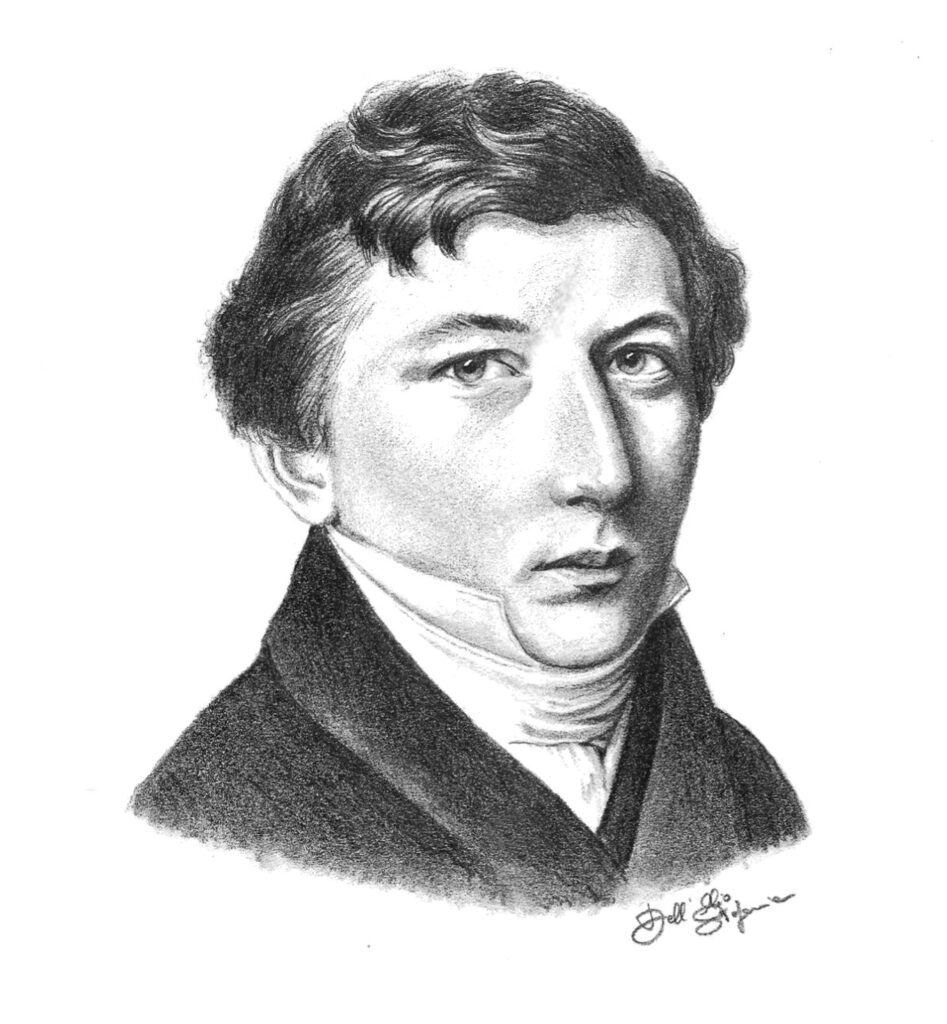
Artwork by Stefania Dell’Olio
© Stefania Dell’Olio
Johan August Arfwedson
Personal details: Born on 10 October 1731 in Nice, France – Died on 24 February 1810 in London, United Kingdom.
Education and Specialisation: Educated at Newcome’s School in Hackney and studied at Peterhouse, University of Cambridge. Qualification: Natural Philosopher, Chemist, and Physicist.
Major Discovery: Discovery and isolation of hydrogen gas (which he called “inflammable air”) as a distinct element in 1766, and the accurate measurement of the density and mass of the Earth through the famous Cavendish Experiment (1797–1798).
Other Less Well-Known Discoveries
1817: Determination of the chemical composition of petalite, revealing that the missing 4% of the mineral’s total mass was accounted for by a previously unknown element (lithium).
1818: Identification of lithium compounds in other silicates and minerals, including spodumene and lepidolite.
1822: Detailed chemical analysis of chrysoberyl, isolating beryllium hydroxide during his quantitative experiments.
1823: Research on the reduction of metallic oxides (such as uranium and manganese oxides) using hydrogen gas.
Ventures and Recognitions
1821: Elected as a member of the Royal Swedish Academy of Sciences.
1823: Established his own private chemical and mineralogical laboratory on his estate at Hedensö, equipped for precision mineral analysis.
1823: The rare sodium-iron silicate mineral arfvedsonite was officially named in his honor by A.O. Walmstedt.
1841: Awarded the Gold Medal of the Royal Swedish Academy of Sciences in recognition of his groundbreaking discovery of lithium.
Johan August Arfwedson was born in 1792 into a wealthy Swedish aristocratic and merchant family. Displaying exceptional academic promise, he entered Uppsala University at an extraordinarily early age, earning degrees in both law and mineralogy. Combining his knowledge of legal affairs with his passion for natural sciences, Arfwedson briefly worked for the Swedish Board of Mines before moving to Stockholm, where he joined the laboratory of the renowned chemist Jöns Jacob Berzelius.
In 1817, while analyzing samples of the mineral petalite from the Utö iron mine in Sweden, Arfwedson noticed an anomaly: the quantitative analysis consistently yielded a missing fraction of about 4% in weight. Investigating further, he isolated a new alkali metal salt whose chemical properties differed from sodium and potassium. Together with Berzelius, he named the new element lithium (from the Greek lithos, meaning “stone”) to highlight its origin in the mineral kingdom, unlike potassium and sodium which were first isolated from plant ashes. Although Arfwedson was unable to isolate pure metallic lithium itself—a feat achieved later by electrolysis—his discovery added a foundational element to the periodic table. Later in life, Arfwedson devoted much of his time to managing his family’s industrial estates, remaining a respected figure in Swedish science until his death in 1841.
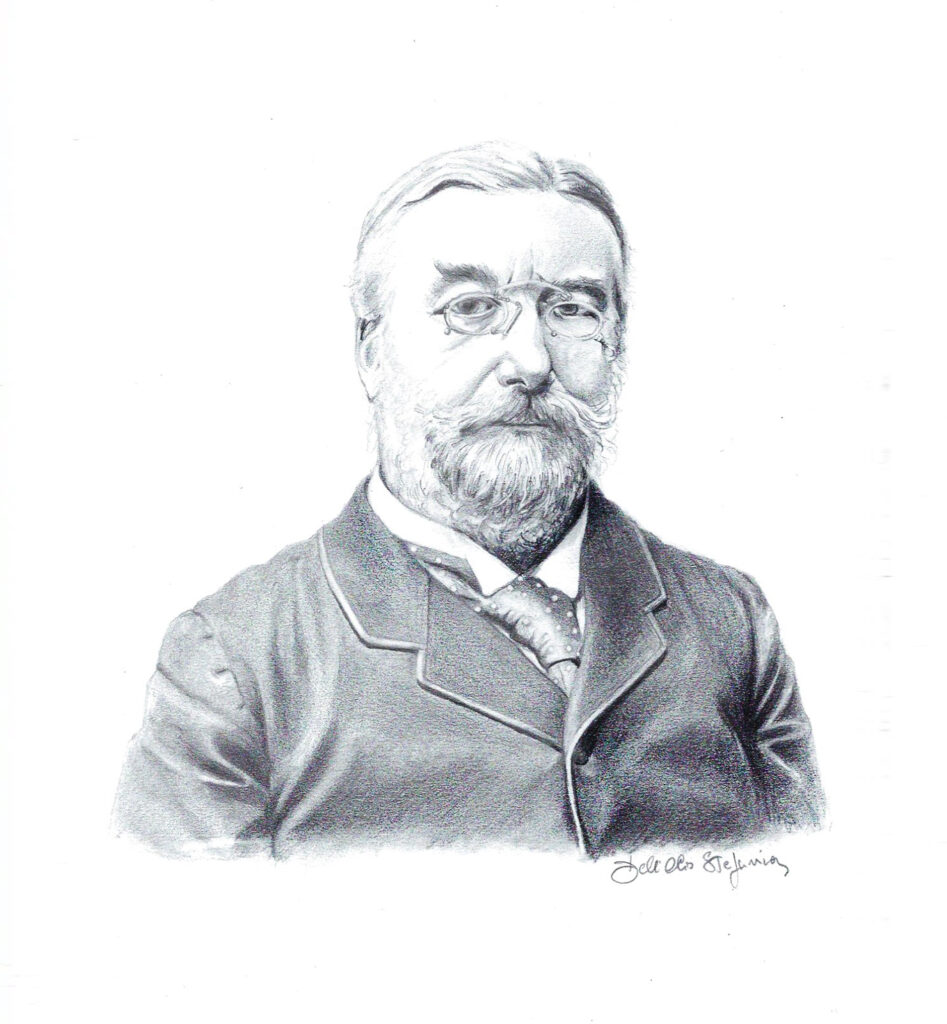
Artwork by Stefania Dell’Olio
© Stefania Dell’Olio
Sir Joseph Norman Lockyer
Personal details: Born on 17 May 1836 in Rugby, United Kingdom – Died on 16 August 1920 in Salcombe Regis, United Kingdom.
Education and Specialisation: Self-taught in the sciences, later appointed Professor of Solar Physics at the Royal College of Science. Qualification: Astronomer and Physicist.
Major Discovery: Identification of the element helium in the solar atmosphere (1868), even before it was discovered on Earth.
Other Less Well-Known Discoveries
1866: Development of a spectroscopic technique for observing solar prominences in broad daylight (without having to wait for an eclipse).
1868: The discovery of helium was made at the same time and independently by the French astronomer Pierre Janssen.
1868: Discovery and measurement of the solar chromosphere (which he himself named).
1873: Formulation of the hypothesis of atomic dissociation in high-temperature stars.
1887: Proposal of the meteorite hypothesis for stellar formation and evolution.
1894: First measurements and systematic correlations between the orientation of ancient monuments (such as Stonehenge and Egyptian temples) and astronomical events, laying the foundations of archaeoastronomy.
Ventures and Recognitions
1869: Elected as a Fellow of the Royal Society (FRS), the UK’s national academy of sciences.
1869: Founded the world-renowned scientific journal Nature, serving as its chief editor for exactly 50 years and transforming it into the premier global platform for interdisciplinary science.
1889: Awarded the prestigious Janssen Medal by the French Academy of Sciences in recognition of his solar spectroscopy achievements.
1897: Knighted as a Knight Commander of the Order of the Bath (KCB) by Queen Victoria for his monumental services to science.
1912: Established the Hill Observatory in Sidmouth, Devon, which was later renamed the Norman Lockyer Observatory and remains an active center for astronomical education today.
Sir Joseph Norman Lockyer was born in Rugby in 1836, but his scientific career truly took off after moving to London in 1857. Initially working as a civil servant at the War Office, he taught himself astronomy from his home in Wimbledon. His breakthroughs eventually earned him a professorship in Solar Physics at South Kensington, a role from which he orchestrated eight scientific expeditions across the globe—including to India and Egypt—to study solar eclipses. In 1911, eager to escape London’s notorious smog, he retired to Salcombe Regis in Devon, where he established the observatory that he would work in until his death in 1920.
Lockyer’s name is forever linked to the extraordinary double discovery of helium in 1868. On 20 October that year, peering through his spectroscope from England, Lockyer spotted an unfamiliar yellow line in the solar spectrum. Unbeknownst to him, the French astronomer Pierre Janssen had captured the very same line just a couple of months earlier, in August, whilst observing an eclipse in India. Entirely unaware of each other’s work, both men posted their findings to the French Academy of Sciences. In a staggering twist of timing, their letters arrived on the exact same day, 26 October, just hours apart. To avoid a massive row over who got there first, the Academy gracefully chose not to pick sides; they awarded the discovery ex aequo to both men, immortalising their joint triumph on a single commemorative medal.
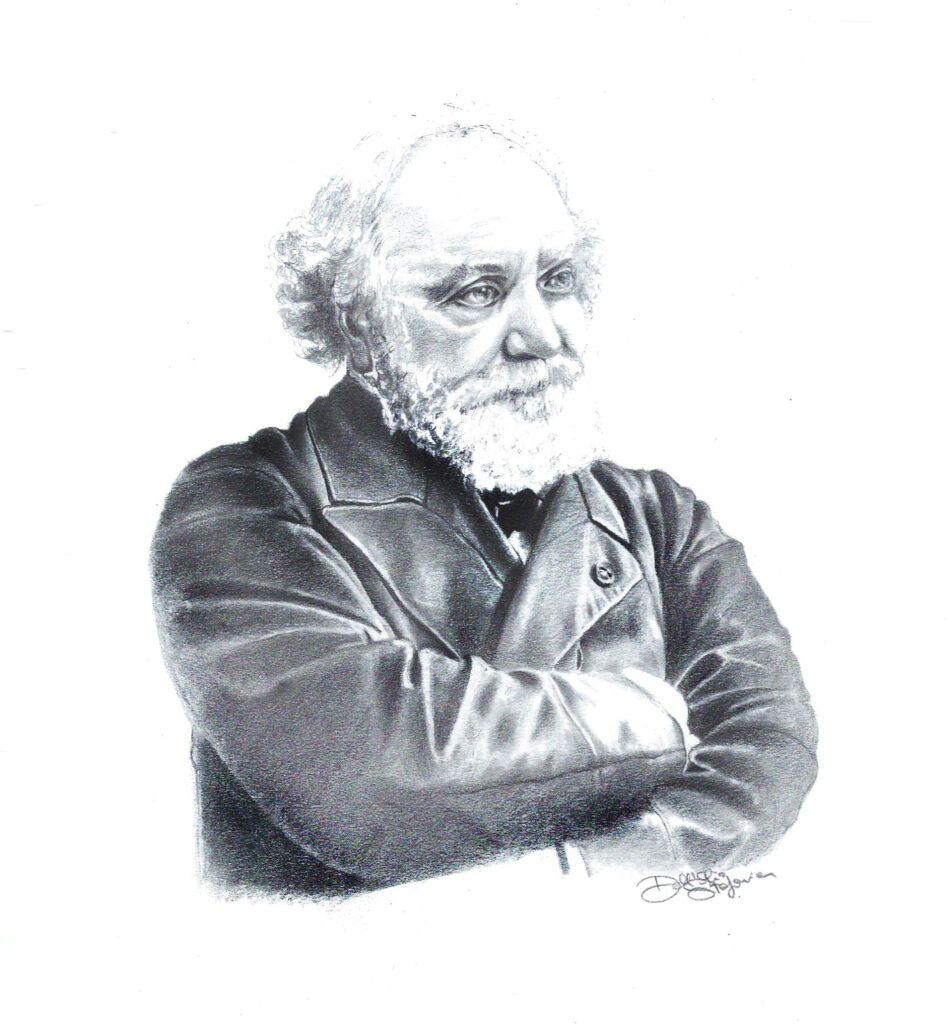
Artwork by Stefania Dell’Olio
© Stefania Dell’Olio
Pierre Jules César Janssen
Personal details: Born on 22 February 1824 in Paris, France – Died on 23 December 1907 in Meudon, France.
Education and Specialisation: Educated at the Faculty of Sciences of the University of Paris (Doctorate in Physical Sciences, 1860); later appointed Professor of Physics at the École Architecture and Director of the Meudon Astrophysical Observatory. Qualification: Astronomer and Physicist.
Major Discovery: Co-discovery of helium in the solar spectrum during the total solar eclipse of 18 August 1868 in Guntur, India, and the simultaneous invention of a spectroscopic technique to observe solar prominences without waiting for an eclipse.
Other Less Well-Known Discoveries
1862: Identification of telluric lines in the solar spectrum, proving that certain absorption lines are caused by water vapor and gases in Earth’s atmosphere rather than the Sun itself.
1874: Invention of the “photographic revolver” (revolver photographique) to record the transit of Venus across the Sun, a pioneering device that laid the technical foundations for modern chronophotography and cinematography.
1893: Construction of a high-altitude observatory near the summit of Mont Blanc (at 4,807 meters) to minimize atmospheric absorption effects in solar spectroscopy measurements.
1904: Publication of the groundbreaking Atlas de photographies solaires, containing over 6,000 detailed photographs documenting the granular structure of the photovoltaic surface of the Sun.
Ventures and Recognitions
1868: Awarded a joint discovery medal (ex aequo) with Sir Norman Lockyer by the French Academy of Sciences for the spectroscopic identification of helium and solar prominences.
1873: Elected as a member of the prestigious Académie des Sciences (French Academy of Sciences) and appointed to the Bureau des Longitudes.
1875: Appointed as the founder and first Director of the Meudon Astrophysical Observatory near Paris, a position he held until his death.
1877: Awarded the Rumford Medal by the Royal Society of London for his pioneering achievements in solar spectroscopy and photography.
1884: Served as a prominent delegate for France at the International Meridian Conference in Washington, D.C., advocating for international standardization of time and meridians.
Pierre Jules César Janssen was born in Paris in 1824 into a cultivated family. A severe childhood accident left him permanently lame, preventing him from attending regular schools during his early years. Undeterred, he pursued higher education independently and at the University of Paris, earning his doctorate in physical sciences in 1860 with a thesis on optics and the eye. Janssen quickly established himself as a master of observational astronomy and spectroscopy, traveling tirelessly across the globe to study solar phenomena—often under extraordinary conditions, such as escaping the Siege of Paris in 1870 in a hot-air balloon (“Le Volta”) just to observe a solar eclipse in Algeria.
Janssen’s legacy is forever tied to the historic total solar eclipse of 18 August 1868 in Guntur, India. Observing the brilliant red solar prominences with a spectroscope, he noticed a bright, unidentified yellow emission line near the sodium D lines. Crucially, Janssen realized that by opening the slit of his spectroscope and tuning it to specific wavelengths, he could observe these solar prominences in full daylight without an eclipse. He dispatched his report to the French Academy of Sciences, where it arrived on 26 October 1868—the very same day as a letter from Norman Lockyer describing the exact same solar line. Recognizing both scientists’ genius, the Academy awarded them a joint honor, cementing Janssen as a co-discoverer of helium and a founding figure of modern astrophysics.
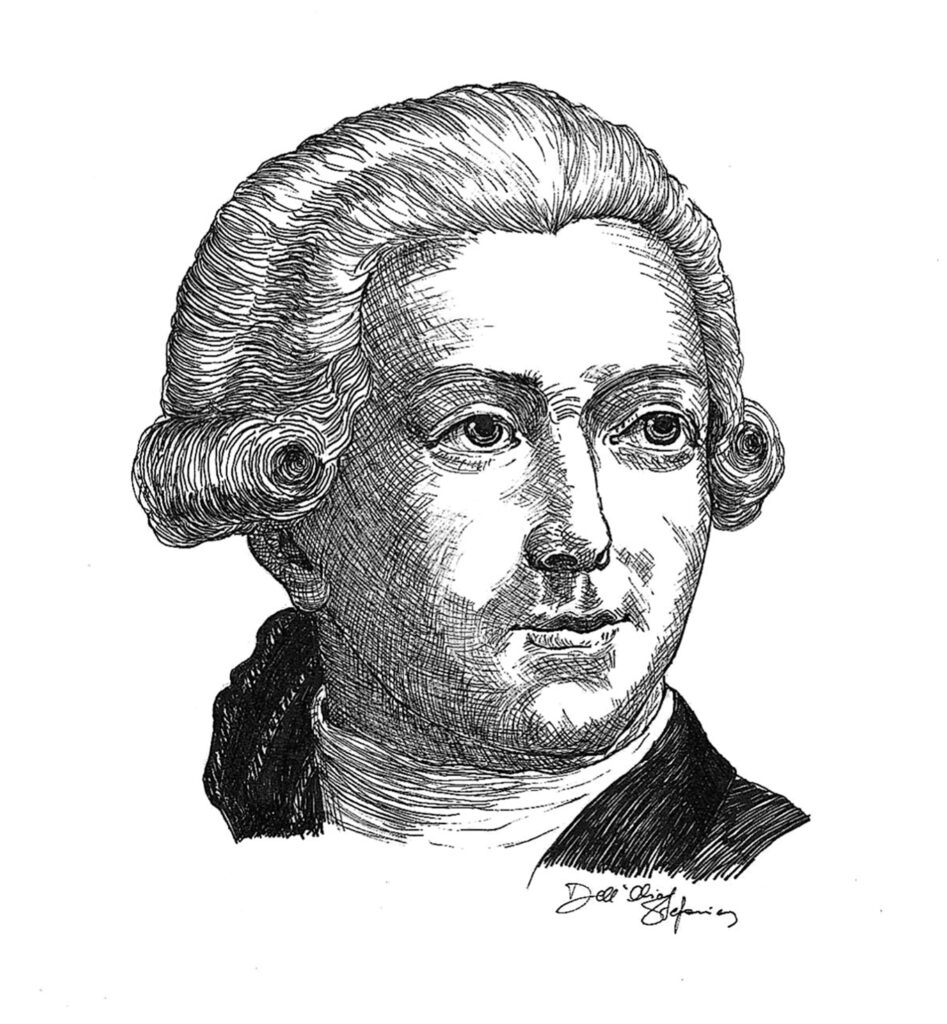
Artwork by Stefania Dell’Olio
© Stefania Dell’Olio
Antoine Laurent de Lavoisier
Personal details: Born on 26 August 1743 in Paris, France – Died on 8 May 1794 in Paris, France.
Education and Specialisation: Educated at Collège Mazarin and studied law at the University of Paris (earned his licentiate in law in 1764, though he never practiced) while studying natural sciences under leading French scholars. Qualification: Chemist, Biologist, and Natural Philosopher (widely recognized as the “Father of Modern Chemistry”).
Major Discovery: Formulation of the Law of Conservation of Mass (“Nothing is lost, nothing is created, everything is transformed”) and the discovery of the role of oxygen in combustion and respiration, overthrowing the long-standing phlogiston theory.
Other Less Well-Known Discoveries
1772: Proof through precise weighing that sulfur and phosphorus gain weight when burned due to their combination with air, proving that calcination and combustion are oxidation processes rather than the release of a substance.
1777: Identification of nitrogen as an unrespirable component of atmospheric air, which he initially named “azote” (from the Greek for “no life”).
1783: Co-creation (with Pierre-Simon Laplace) of the ice calorimeter, conducting the first systematic measurements of specific heat capacity and animal respiration heat.
1783: Confirmation of the composition of water, synthesizing it by burning hydrogen (“inflammable air”) with oxygen, and subsequently naming the gas “hydrogen” (Greek for “water-former”).
1787: Co-development of the modern system of chemical nomenclature (alongside Morveau, Berthollet, and Fourcroy), introducing standardized terms like “sulfate”, “nitrate”, and “oxide”.
1789: Publication of the Traité Élémentaire de Chimie, the first modern chemistry textbook, which defined a chemical element as a substance that cannot be broken down by chemical analysis.
Ventures and Recognitions
1768: Elected as a member of the prestigious Académie des Sciences (French Academy of Sciences) at the remarkably young age of 24.
1768: Purchased a share in the Ferme Générale, the private tax-collecting agency for the French crown—a financial venture that funded his private laboratory but ultimately led to his execution during the French Revolution.
1775: Appointed Commissioner of the Royal Gunpowder Administration (Régie des poudres et salpêtres), where he revolutionized French gunpowder manufacturing and vastly improved its quality.
1790: Appointed to the French Academy’s Commission of Weights and Measures, playing a central role in establishing the metric system (defining the unit of mass, the kilogram).
1791: Appointed director of the Caisse d’Escompte (a precursor to the Bank of France), contributing significantly to French national financial planning and agricultural science.
Antoine Laurent de Lavoisier was born in Paris in 1743 into a wealthy bourgeois family. Though he completed a law degree at his father’s urging, his true passion lay in the natural sciences. Inheriting a massive fortune at a young age and expanding it through his involvement with the Ferme Générale (the royal tax agency), Lavoisier used his wealth to build the most sophisticated, state-of-the-art chemical laboratory in Europe. His work was transformed into a collaborative genius through his marriage to Marie-Anne Paulze, who translated English scientific papers, illustrated his apparatus, and kept meticulously detailed laboratory records.
Lavoisier’s scientific revolution replaced centuries of qualitative alchemy with rigorous quantitative measurement. By introducing sealed glass vessels and precise balances to measure the exact weight of reactants and products before and after chemical reactions, he proved that mass is always conserved. In 1774, after meeting Joseph Priestley—who had isolated an unusual gas—Lavoisier conducted crucial experiments demonstrating that this gas (which he named “oxygen”) was the active agent in both combustion and animal respiration.
Tragically, Lavoisier’s position as a tax collector made him a prime target during the Reign of Terror at the height of the French Revolution. Arrested along with 27 other members of the Ferme Générale, he was tried and guillotined on 8 May 1794. Popular legend holds that when appeals were made to spare his life for his scientific genius, the revolutionary judge declared, “La République n’a pas besoin de savants” (“The Republic has no need for scientists”). The day after his death, the famous mathematician Joseph-Louis Lagrange lamented: “It took them only a moment to cause this head to fall, and a hundred years will not suffice to produce its like.”

[01] The Molecular Cloud
It all begins in the vastness of space, where a gigantic cloud of gas and dust drifts through the freezing darkness, dense with mystery and potential.
[02] Gravitational Collapse
Then, the balance is broken. Gravity pulls the cloud inward, drawing its material toward the center and causing it to spin faster and faster.
Driven by this rapid rotation, the cloud flattens into a wide, spinning disk. At its center, matter continues to gather and become increasingly concentrated.
[03] The Protoplanetary Disk
[04] The Protostar
At the heart of this swirling cloud, a protostar begins to take shape. It is the first spark: pressure and temperature begin to rise dramatically.
[05] The Birth of the Sun
The core becomes an immense furnace. Once the critical temperature is reached, nuclear fusion ignites — and our Sun is born.
[06] Dust and Pebbles
Meanwhile, within the disk surrounding the newborn star, a chaotic dance begins. Dust particles collide and stick together, gradually forming grains and small rocky bodies.
[07] Planetesimals
The process continues. Through collisions and the force of gravity, these small fragments grow into planetesimals — solid building blocks of rock and ice orbiting the young Sun.
[08] Protoplanets
The planetesimals continue to collide and merge, giving rise to protoplanets — the embryos of the worlds that will eventually form.
[09] Planet Formation
The system gradually takes shape. In the regions closest to the Sun, where temperatures are higher, rocky planets begin to form, including Earth. Farther out, where it is much colder, gas and ice giants begin to take shape.

SUN
MERCURY
VENUS
— services
/03
We cover every stage of production — from the first creative conversation to the final exported frame.
A cinematic declaration of who you are and why it matters. We develop the concept, direct the shoot, and deliver a film that works as a hero asset across your website, investor decks, and paid media. Every brand film comes with a full cutdown suite — 60s, 30s, 15s, 6s — so one production fuels your entire content ecosystem.
Built for moments that need to land hard and fast. We produce campaign films for product launches, seasonal pushes, and media-worthy activations — engineered for performance across TV, OOH, paid social, and digital display. One production budget, a full asset suite, consistent across every touchpoint.
For brands with a story too big for a single film. We produce short-form documentary series — typically 3 to 6 episodes — that build audience over time and establish genuine authority. We handle everything: research, multi-location production, edit, grade, and platform delivery.
If you have footage, we can make it broadcast-ready. Our editors, colourists, and sound designers have finished work for streaming platforms, international broadcasters, and global campaigns. We also provide motion graphics and title design for films that need a stronger visual identity.
— Process
/04
Great production isn’t accidental. It’s designed.
A clear process is the first creative decision we make. It keeps projects on time, keeps clients informed, and keeps our crew focused on what matters — capturing the story, not managing the chaos.
Discover
1
We start by understanding your audience, your message, and the emotional response you want to trigger. Every great film begins with a great brief.
Script & Storyboard
2
We develop the narrative arc, scripted or documentary-style, and map out every shot before the camera rolls. No surprises on set.
Production
3
Our crew captures your story with precision and presence — whether that’s a single-day studio shoot or a multi-country documentary expedition.
Post & Delivery
4
We edit, grade, mix, and deliver broadcast-ready files across every format and platform you need. Timelines are clear, revisions are structured.
Contact us
5
Every great film starts with a single conversation. Tell us what you’re building and we’ll tell you what’s possible.
— Our team
/05
A small, senior crew who’ve spent years getting better at one thing — telling stories that stick.
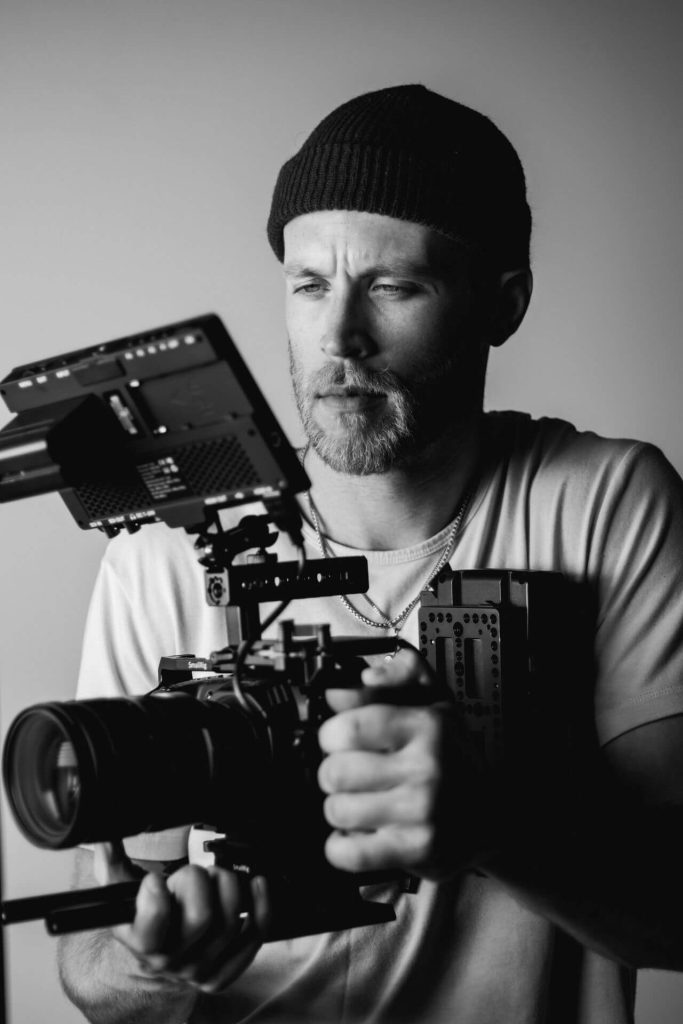
Marco den Hartog
Founder & Director
Marco has directed over 200 brand films across Europe. He started in documentary, and it shows — every frame is built around a human truth.

Lena Vasquez
Executive Producer
Lena keeps the wheels turning without letting them show. She’s managed productions across 14 countries and has never missed a delivery date.
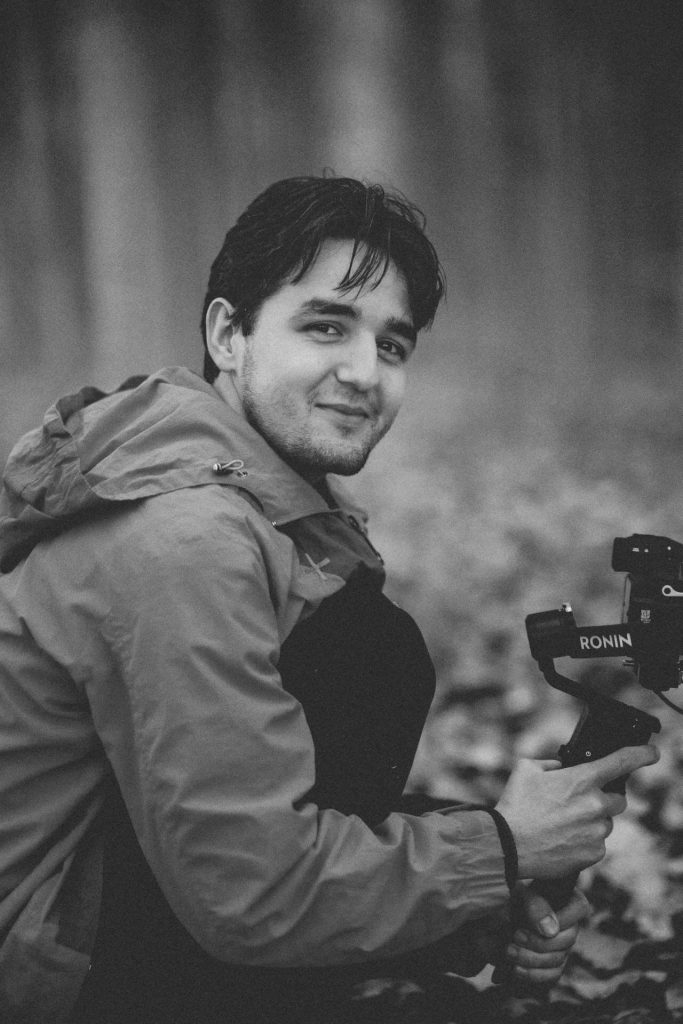
Daan Hoekstra
Director of Photography
Daan has shot campaigns for global brands and intimate social stories. His eye for available light is why clients keep asking him back.
— testimonials
/06
Words from the people we’ve made films for.
★★★★★
4.5/5
“We briefed them on a Monday. By Friday, we had a rough cut that made our CEO cry. In a good way.”

Emma V.
Head of Brand, Aurum
★★★★★
5/5
“Every agency promised us a great film. Inspiro is the only one that delivered one.”

Jonas F.
Co-founder, Dwell
★★★★★
4.8/5
“We’ve worked with bigger studios and spent more money. Nothing has ever performed like the film Inspiro made us.”

Ren T.
VP Marketing, Fieldwork
— Why us
/07
We show up, we listen, and we deliver — every time.

The director who hears your brief is the same person who calls cut on set and approves the final grade. No handoffs, no lost context, no creative drift between departments.

Every production includes a hero film plus a complete cutdown suite — 60s, 30s, 15s, and 6s. One shoot day, one budget, everything you need to show up consistently across every channel.

Our sprint model takes most brand films from confirmed brief to final delivery in 21 days. Fast because we’re organised, structured, and have done this enough times to know exactly where projects lose time.

We cap ourselves at six active projects at any one time. Every frame that leaves this studio has been seen, questioned, and approved by a senior director — because attention is the one thing we refuse to spread too thin.
— Blog
/08
Thinking out loud on brand storytelling, production craft, and what actually makes a film work.
-

Why Your Brand Needs a New Story.
This is some dummy copy. You’re not really supposed to read this dummy copy, it is just a placeholder for people who need some type to visualize what the actual copy might look like if it were real content. If you want to read, I might suggest a good book, perhaps Melville. That’s why they call it, the dummy copy. This, of course, is not the real copy for this…


— Start a project
/09
Let’s make something!
+31 10 000 0000
hello@inspiro.com